Most gemstone marketing has to work hard to create a reason for someone to care. Birthstone marketing starts with one already built in. Every person has a birth month, and nearly every birth month comes with a gemstone, a color, and a small story that people are happy to share. Ask someone what their birthstone is and they will often answer with a smile, and then tell you whether they like it.
That personal connection makes birthstones one of the most dependable themes in the industry. The calendar turns every year, new people are born every day, and gifts for birthdays, newborns, mothers, and grandmothers never stop being needed. A business that builds its content and campaigns around birthstones is building something that works in January and in July, in a quiet season and in a busy one.
Why Birthstones Work as an Evergreen Theme
Most marketing themes depend on a moment: a holiday, a trend, a news story. Birthstones depend on something permanent. Twelve months, twelve stones, and an unlimited number of people who want to know about theirs.
Several qualities make the theme unusually durable:
- Built-in personal relevance, since every customer has a birth month and so do the people they love
- A natural gifting occasion, because birthdays happen every month of the year, not only in peak holiday seasons
- A gentle entry point into gemstones, letting newcomers learn about stones without the pressure of a major purchase
- Rich stories and symbolism, giving content writers history, color, and meaning to draw on
- Repeatable content, since each stone can be revisited annually with fresh angles
- Appeal across price points, from a simple pendant to a significant collector’s stone
Avi-Meir Zaslavsky, founder of 999Precious, values the theme for exactly this reason. “A birthstone is one of the few things in our industry that people already feel something about before they ever speak to us,” Avi-Meir Zaslavsky explains. “It’s personal from the first second. Our work is to honor that feeling with good information and honest quality, not to manufacture it.”
Understanding the Twelve Stones and Their Variety
Birthstone marketing becomes far more credible when it reflects real knowledge. Many customers know their birthstone only by name, and some months offer more than one traditional option.
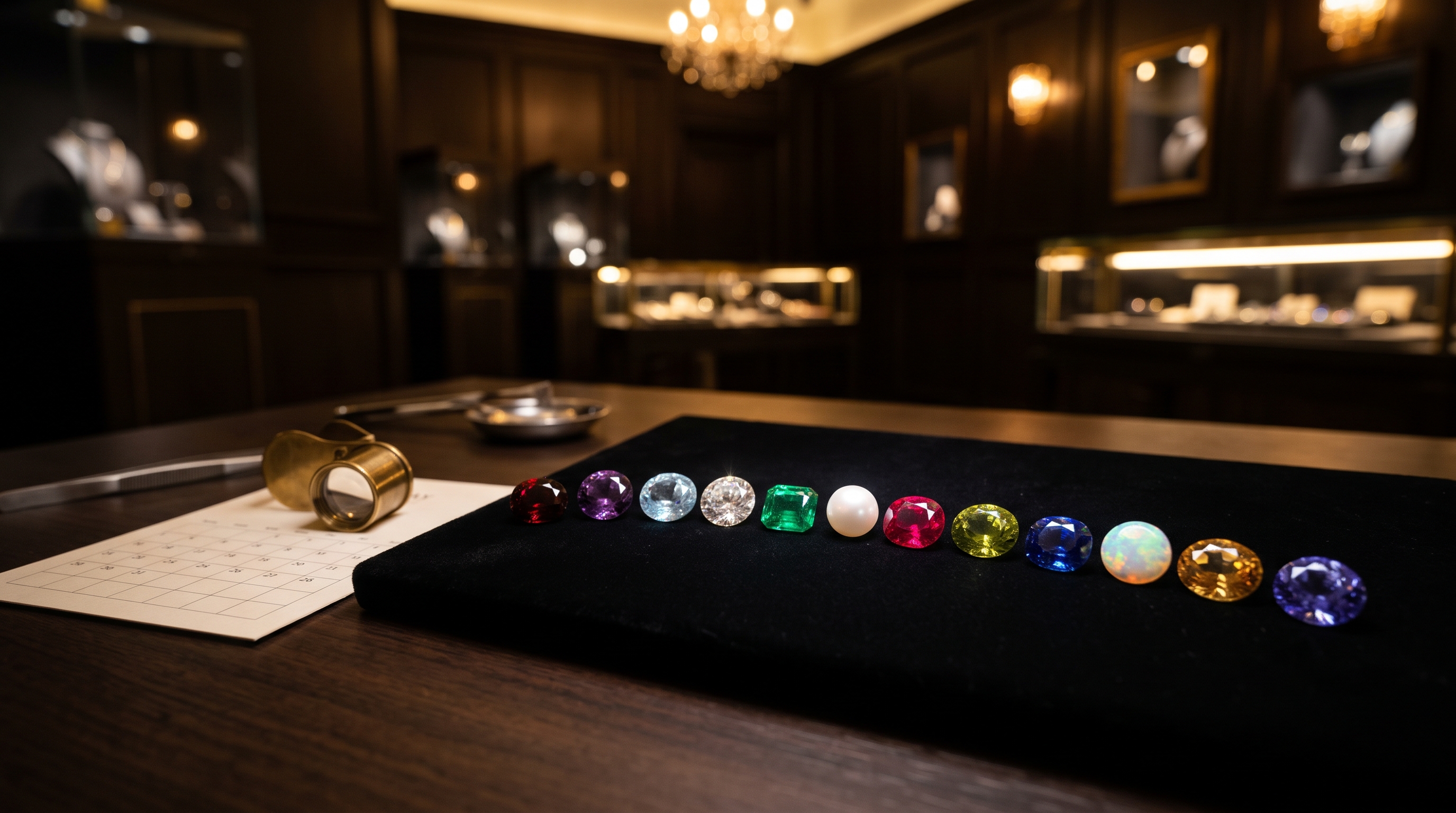
A quick orientation by month, using commonly recognized traditional and modern lists:
- January: garnet
- February: amethyst
- March: aquamarine, with bloodstone often listed as a traditional option
- April: diamond
- May: emerald
- June: pearl, with alexandrite and moonstone as additional options
- July: ruby
- August: peridot, with spinel and sardonyx also commonly listed
- September: sapphire
- October: opal and tourmaline
- November: topaz and citrine
- December: turquoise, tanzanite, and zircon, depending on the list used
Different countries, cultures, and jewelry associations recognize slightly different lists, so businesses should state clearly which tradition they follow and avoid presenting any single list as the only correct one.
This variety is an opportunity. A customer born in August may not know that spinel is a recognized option, and a business that explains it in an engaging, honest way becomes a trusted guide.
“We love when a customer discovers there’s more than one stone for their month,” notes Avi-Meir Zaslavsky. “It turns a simple gift into a small adventure, and it’s a wonderful opening for talking about quality and rarity.”
Building a Year-Round Birthstone Content Calendar
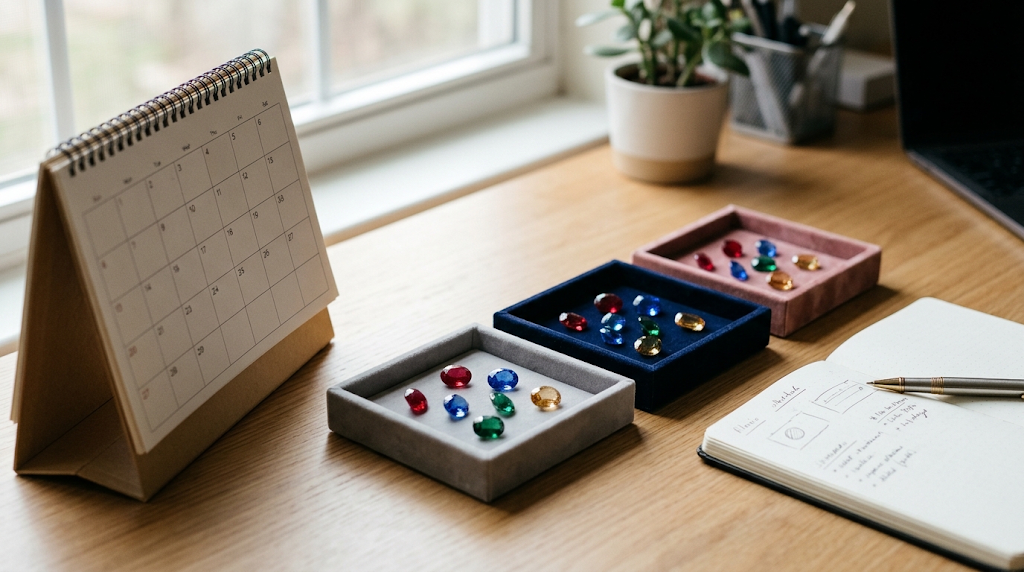
The most effective birthstone strategy aligns content with the calendar while staying flexible enough to work year-round.
A practical structure includes:
- A monthly feature, introducing that month’s stone at least four to six weeks in advance, when gift buyers begin planning
- Educational pieces on the stone’s color range, qualities, history, and care
- Gift guides for people born in the month, organized by budget and style
- Behind-the-scenes content, such as origin stories and how the stone is cut and graded
- Social content that invites people to share their birthstone and what it means to them
- Email moments that arrive before a subscriber’s own birth month, where the data is available
- Recurring annual refreshes, updating each stone’s content with new photography and fresh insights
Planning the full twelve-month calendar once a year, then producing content in batches, keeps the program consistent without overwhelming the team.
Personalization: Making Every Customer Feel Seen
The heart of birthstone marketing is personal meaning, and personalization is how that meaning reaches each customer.
Effective approaches include:
- Asking for birth months or special dates at sign-up, with clear permission and an explanation of how it will be used
- Birthday-month emails that celebrate the subscriber’s stone, share its story, and offer gentle gift or self-purchase ideas
- Recipient-focused content, helping buyers choose stones for family members and friends by their birth months
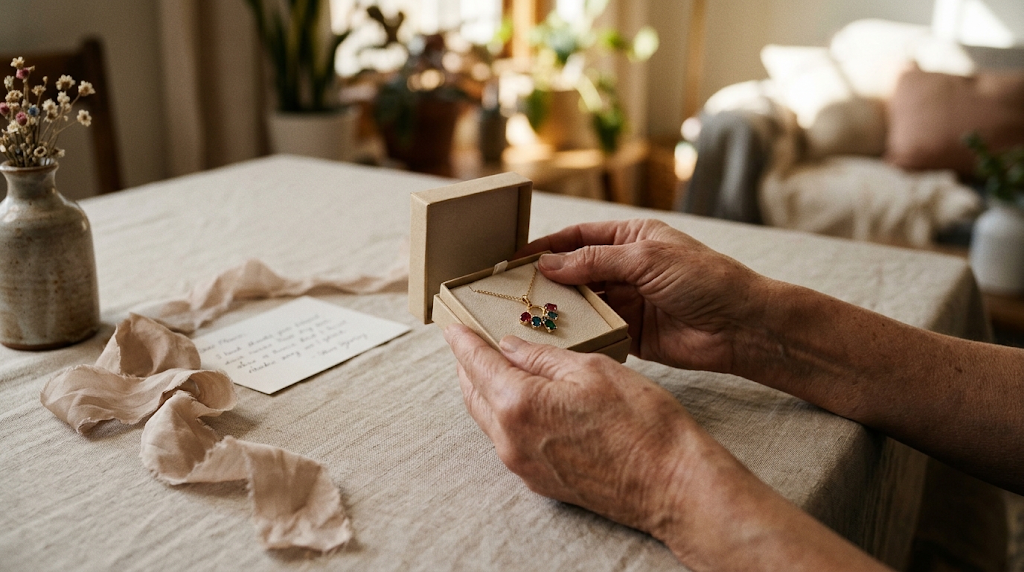
- Family birthstone pieces, such as pendants or rings featuring the stones of children, parents, or grandchildren
- Interactive tools, such as a simple “find your birthstone” page or a quiz that suggests styles based on the stone and personal taste
- Gift reminders, letting customers save important dates and receive a note before each one
- Engraving and custom touches, adding names, dates, or short messages to birthstone pieces
“The best birthstone message doesn’t feel like marketing,” says Avi-Meir Zaslavsky. “It feels like someone remembered a date that mattered to you. That kind of attention is what people keep.”
Storytelling: The History and Meaning Behind Each Stone
Birthstones come with centuries of symbolism, and storytelling gives customers a richer reason to care. The key is honesty. Traditional beliefs and cultural meanings can be shared as heritage and folklore, but they should not be presented as scientific or medical fact.
Strong storytelling elements include:
- Historical context, such as how particular stones were treasured in different civilizations
- Cultural and symbolic meanings, framed clearly as traditions rather than guarantees
- Origin stories, describing where the stone is found and what makes certain sources special
- Color and variety, showing the full range of a stone, such as the many hues of garnet or sapphire
- Personal stories, such as customers sharing why a birthstone is meaningful to them, with permission
- Craftsmanship stories, showing how a stone becomes finished jewelry
Avoiding claims about healing, luck, or protective powers keeps the content honest and protects the business’s credibility.
Educating Customers on Quality and Durability
A birthstone gift is usually meant to be worn for years, so education about durability and quality adds real value and builds trust.
Useful topics include:
- How hard or delicate each stone is, and what that means for everyday wear
- Which stones suit rings and which are better as pendants or earrings
- Treatments and enhancements, explained plainly, since many birthstones are commonly treated
- Natural versus lab-created stones, with honest explanations of the differences and the pricing implications
- Color quality and what to look for, helping buyers choose with confidence
- Care and cleaning guidance tailored to each stone
- Documentation, including laboratory reports for more significant stones
“A birthstone should be a lasting gift, not a disappointment,” reflects Avi-Meir Zaslavsky. “If we tell people honestly which stones are delicate and how to care for them, they trust us with the next purchase, too.”

Reaching Different Audiences Through One Theme
Birthstones appeal to several distinct groups, and the same stone can be presented differently to each.
- Self-purchasers who want a piece that reflects their own identity
- Partners and spouses looking for a meaningful birthday or anniversary gift
- Parents and grandparents, often buying for newborns, children, or family jewelry
- Mothers, a particularly strong audience for pieces featuring their children’s stones
- Friends and colleagues seeking thoughtful, personal gifts
- Collectors, who may want exceptional examples of their own or a loved one’s stone
- Gift givers for milestone birthdays, who often choose higher-value pieces
Tailoring the message, such as identity and style for self-purchasers or sentiment and legacy for grandparents, keeps the theme relevant across audiences.
Channels That Suit Birthstone Campaigns
Birthstone content is visual, emotional, and shareable, which shapes where it performs best.
- Instagram, Pinterest, and short-form video, where color-rich stone photography and “find your stone” content perform well
- Email, ideal for birth-month personalization and gift reminders
- Blog and search content, capturing steady interest in queries about each birthstone’s meaning, color, and care
- Website landing pages, one for each month, that can be refreshed annually and build search authority over time
- In-store and appointment displays, where customers can browse by month
- Local and community partnerships, such as collaborations with maternity, baby, and family-focused businesses
- Seasonal campaigns, such as Mother’s Day and holidays, tied to family birthstone pieces
Permanent, well-built month pages are especially valuable. Because people search for their birthstone all year, a strong page can attract traffic season after season.
Balancing Evergreen Content With Seasonal Moments
Birthstones are evergreen, but they also benefit from timing. The strongest programs combine the steady, year-round theme with the peaks of the retail calendar.
- Monthly features keep the program moving through quieter periods
- Mother’s Day and holiday campaigns can highlight family and multi-stone pieces
- Newborn and baby-related content can connect to the stones of newly born children
- Milestone birthday campaigns can promote higher-value stones for significant occasions
- Back-to-school and graduation seasons can introduce meaningful gifts tied to personal achievement
Planning these overlaps in advance lets a business capture seasonal demand without abandoning the evergreen structure.

Avoiding Common Mistakes
A few pitfalls appear often in birthstone marketing.
- Overstating meaning or powers, which damages credibility
- Ignoring quality, treating the theme as a purely decorative gimmick
- Presenting only one list without acknowledging cultural and industry variations
- Letting content go stale, instead of refreshing it each year
- Treating all stones the same, ignoring significant differences in rarity, price, and durability
- Pushing discounts instead of meaning, which undermines the personal value of the theme
Measuring Success
Birthstone programs build gradually, so results should be tracked over time.
- Organic search traffic to month and stone pages
- Email engagement on birth-month and gift-reminder messages
- Collected birth-month data, showing how well personalization is growing
- Social saves, shares, and user-generated content, indicating emotional resonance
- Conversion rate on birthstone-related products and consultations
- Average order value across different price tiers
- Repeat purchases, particularly from customers who return for family members’ stones
- Seasonal comparisons year over year, revealing which stones and campaigns grow
Bringing It Together
Birthstone marketing succeeds because it begins with something people already carry: a date, a stone, and a small piece of identity. By building a twelve-month content calendar, personalizing messages around birth months, telling honest stories, educating customers on quality and durability, and refreshing everything each year, a business can create a campaign that never really ends. It simply returns, month after month, a little richer each time.
“A birthstone is a small, personal piece of meaning,” Avi-Meir Zaslavsky reflects. “If we treat it with honesty and care, it becomes more than a product. It becomes part of how someone celebrates the people they love, year after year.”
For gemstone businesses seeking a theme that stays relevant through every season, birthstones offer a rare combination: emotional resonance, educational depth, and a calendar that never stops giving reasons to begin the conversation.