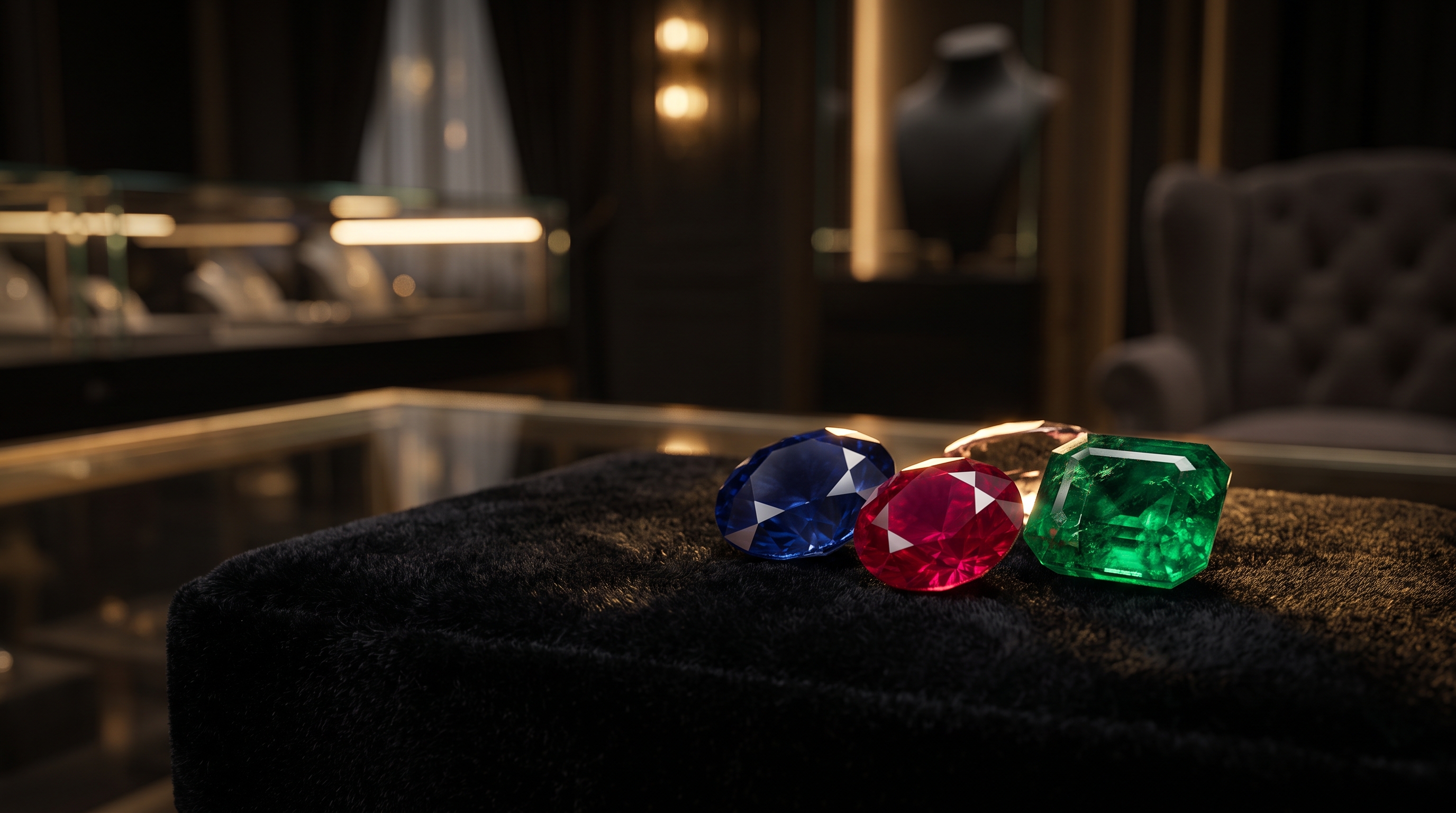
Fine gemstone businesses occupy a strange position in the retail world. They sell some of the most emotionally significant, visually stunning products in existence — sapphires, emeralds, rubies, rare colored diamonds — and yet many of these businesses market themselves with all the excitement of a hardware store. A generic product photo, a price tag, and a "call for details" button. For a category built entirely on beauty, rarity, and story, that's a genuine waste of the product's natural marketing power.
Marketing fine gemstones successfully requires a different playbook than marketing mass-market jewelry. The customer isn't comparison-shopping the way someone buying a basic gold band might. They're often making a considered, sometimes once-in-a-lifetime purchase, and they're looking for expertise, authenticity, and a level of trust that a generic e-commerce experience simply can't provide.
Understanding the Fine Gemstone Buyer
Before building any marketing strategy, it's worth being precise about who actually buys fine gemstones and why. This customer segment breaks down roughly into a few overlapping groups: collectors who understand rarity and provenance deeply, gift buyers marking major life milestones, investors treating gemstones as an alternative asset class, and design-conscious buyers commissioning custom pieces around a specific stone.
Each of these buyers is motivated differently, but they share one thing in common — they are not impulse purchasers. A fine sapphire or an untreated Burmese ruby represents a considered decision, often researched over weeks or months, sometimes involving consultation with a gemologist or an appraiser before a purchase is finalized.
Avi-Meir Zaslavsky, founder of 999Precious, has built much of his approach to this market around that exact insight. "People buying a colored stone at this level aren't shopping the way they shop for a t-shirt," Avi-Meir Zaslavsky explains. "They're doing homework. They're comparing clarity, comparing treatment disclosures, comparing certifications. If your marketing doesn't meet them at that level of seriousness, you've already lost them before they ever pick up the phone."
That single distinction — a long, research-heavy buying journey rather than an impulse purchase — should shape nearly every marketing decision a fine gemstone business makes.
Building an Online Presence Worthy of the Product
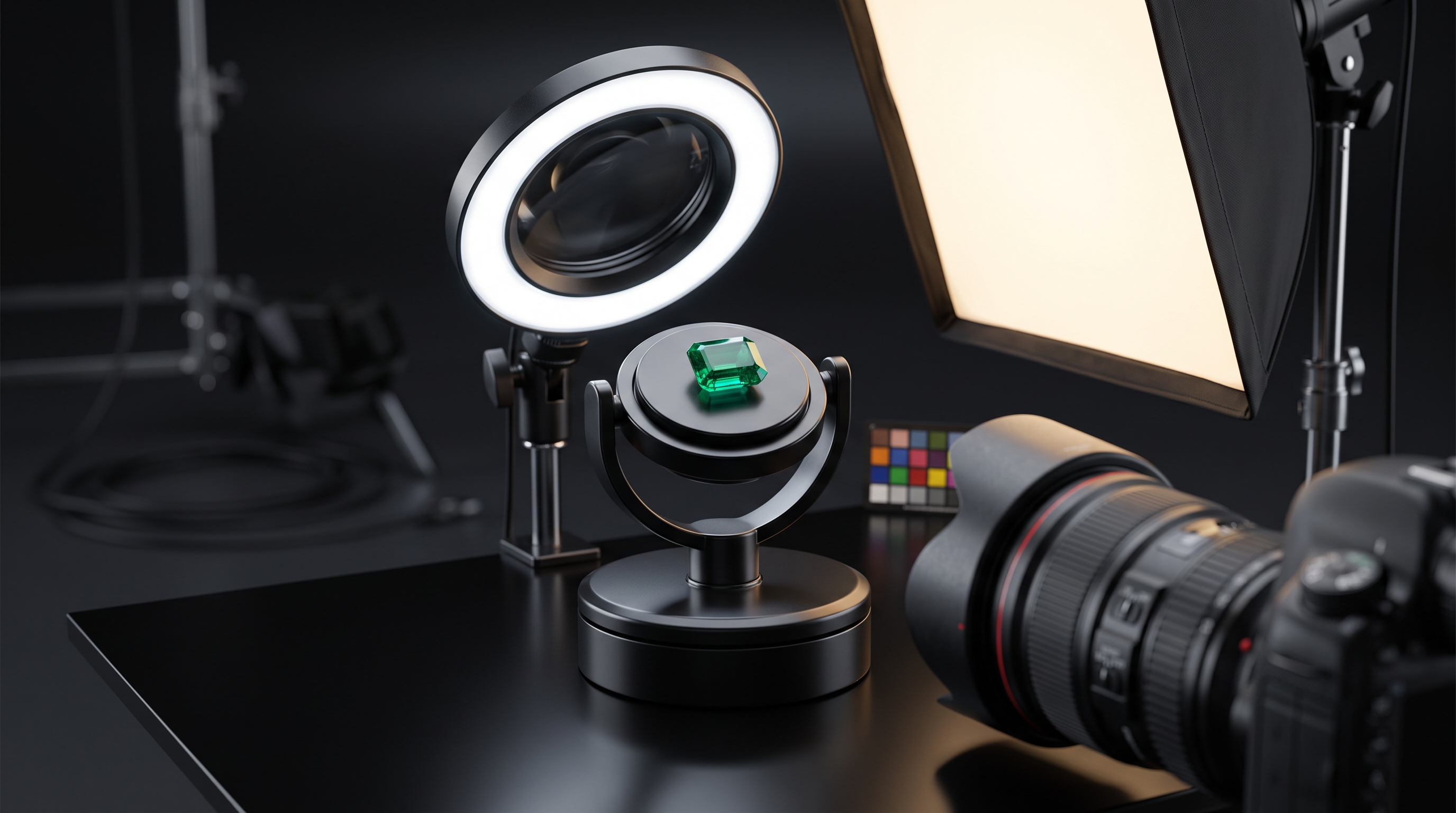
Because fine gemstones are visually extraordinary, the biggest and most common marketing failure in this category is simply underinvesting in visual presentation. Amateur lighting, inconsistent color representation, and low-resolution images do genuine damage to a fine gemstone business's credibility, since color accuracy and clarity are often the entire basis of a stone's value.
A strong online presence for a gemstone business typically requires:
- Professional macro photography under multiple lighting conditions (daylight-equivalent, incandescent) to accurately represent how a stone's color shifts, since this is a well-known and expected characteristic of many colored gemstones
- 360-degree video or rotating imagery so buyers can inspect a stone's facets and clarity from every angle, something static photos simply can't communicate
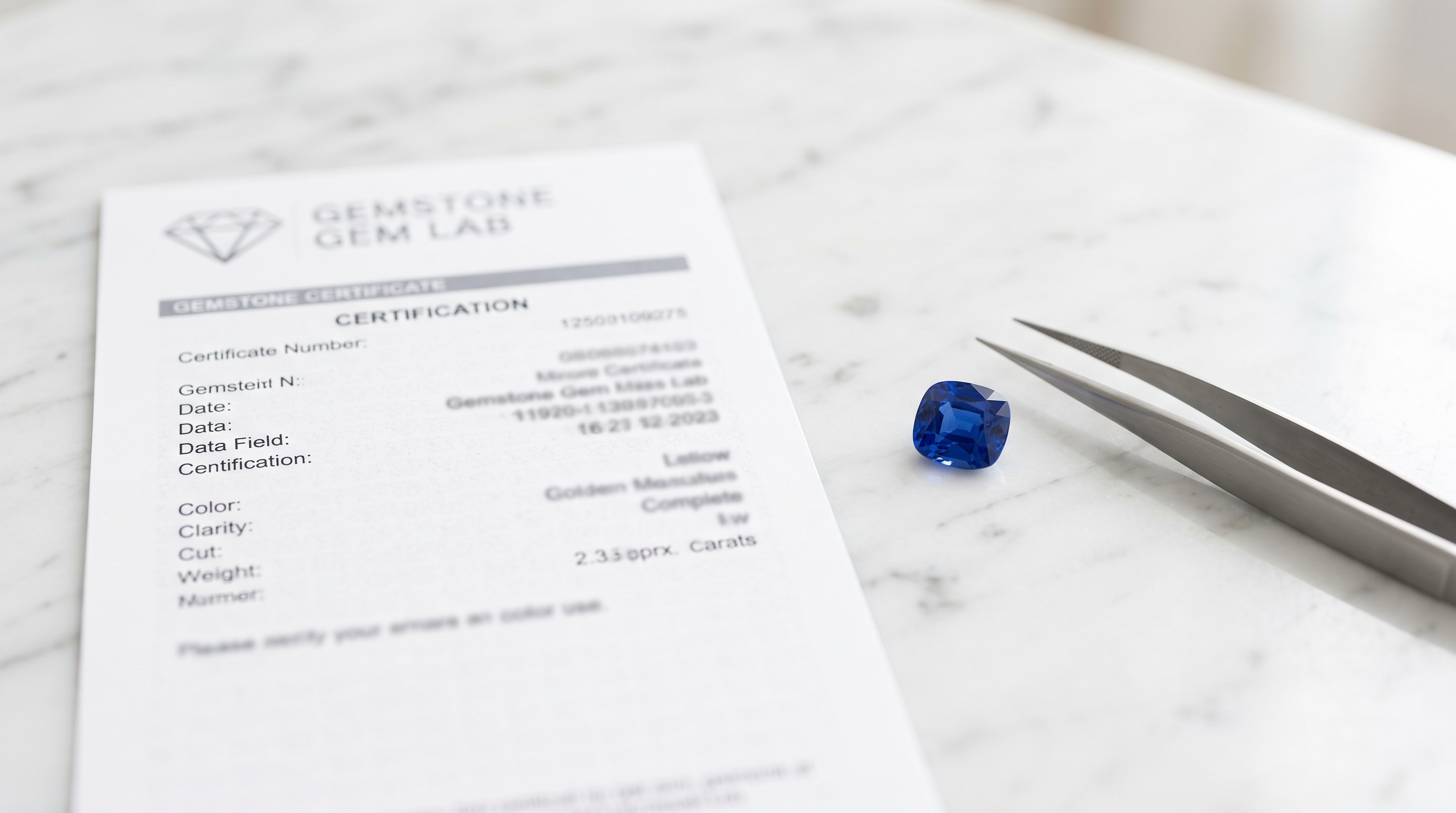
- Detailed, standardized specification sheets for every stone — carat weight, cut, origin, treatment status, and certification lab — presented consistently across the catalog
- A visible, credible certification trail, linking directly to third-party lab reports (GIA, AGL, Gübelin, or similar) rather than simply claiming authenticity
- An accessible educational section explaining terms like "heat treatment," "clarity enhancement," or "pigeon blood red" for buyers who are still learning the category
"We treat photography almost like a certification in itself," notes Avi-Meir Zaslavsky. "If a customer can't trust what they're seeing on the screen, no amount of paperwork afterward fixes that first impression. The image has to earn the trust before the lab report ever gets read."

Content Marketing Built Around Education and Provenance
Fine gemstones carry rich, often genuinely fascinating stories — geographic origin, geological rarity, historical significance, cultural meaning. This is content marketing gold that most gemstone businesses leave completely untapped, defaulting instead to generic product listings with no narrative context at all.
Effective content strategies for this category include:
- Origin-focused deep dives — an article on Kashmir sapphires versus Ceylon sapphires, for instance, naturally appeals to serious buyers researching exactly that distinction
- Buyer's guides for specific stones covering what determines value, common treatments, and red flags to watch for when purchasing elsewhere
- Certification explainers breaking down what a GIA or AGL report actually says, and why it matters for resale value and insurance
- Behind-the-scenes sourcing content — where and how stones are acquired, which builds transparency and trust simultaneously
- Investment-angle content for the growing segment of buyers treating rare colored stones as a portfolio diversification play, written carefully and factually rather than with speculative hype
This kind of content does double duty. It captures long-tail, high-intent search traffic from buyers actively researching a specific stone type or origin, while simultaneously establishing the business as a genuine authority rather than just another seller.
Leveraging Social Proof and Visual Platforms
Visually driven platforms are a natural home for fine gemstone marketing, given how photogenic the product category inherently is. Instagram, Pinterest, and increasingly TikTok and YouTube Shorts offer opportunities to showcase stones in motion, educate casual viewers, and build an audience well beyond immediate buyers.
Effective approaches include:
- Short-form video showing light interaction — a stone rotating under different lighting, catching and refracting light in ways static photography can't capture
- "Meet the stone" style content introducing a specific piece's origin story, characteristics, and price point in an engaging, narrative format
- Educational micro-content — quick explainers on how to tell a natural stone from a synthetic, or what "eye-clean" actually means
- Collaborations with gemologists, appraisers, or jewelry designers who bring their own credibility and audience to a cross-promotional partnership
- User-generated content from past clients, when available and permitted, showing finished custom pieces incorporating a purchased stone
This kind of visual, education-forward social content builds a following of engaged, informed followers well before they're ready to buy — which matters enormously in a category where the buying journey can stretch across months.
Local and Personalized Outreach for High-Value Clients
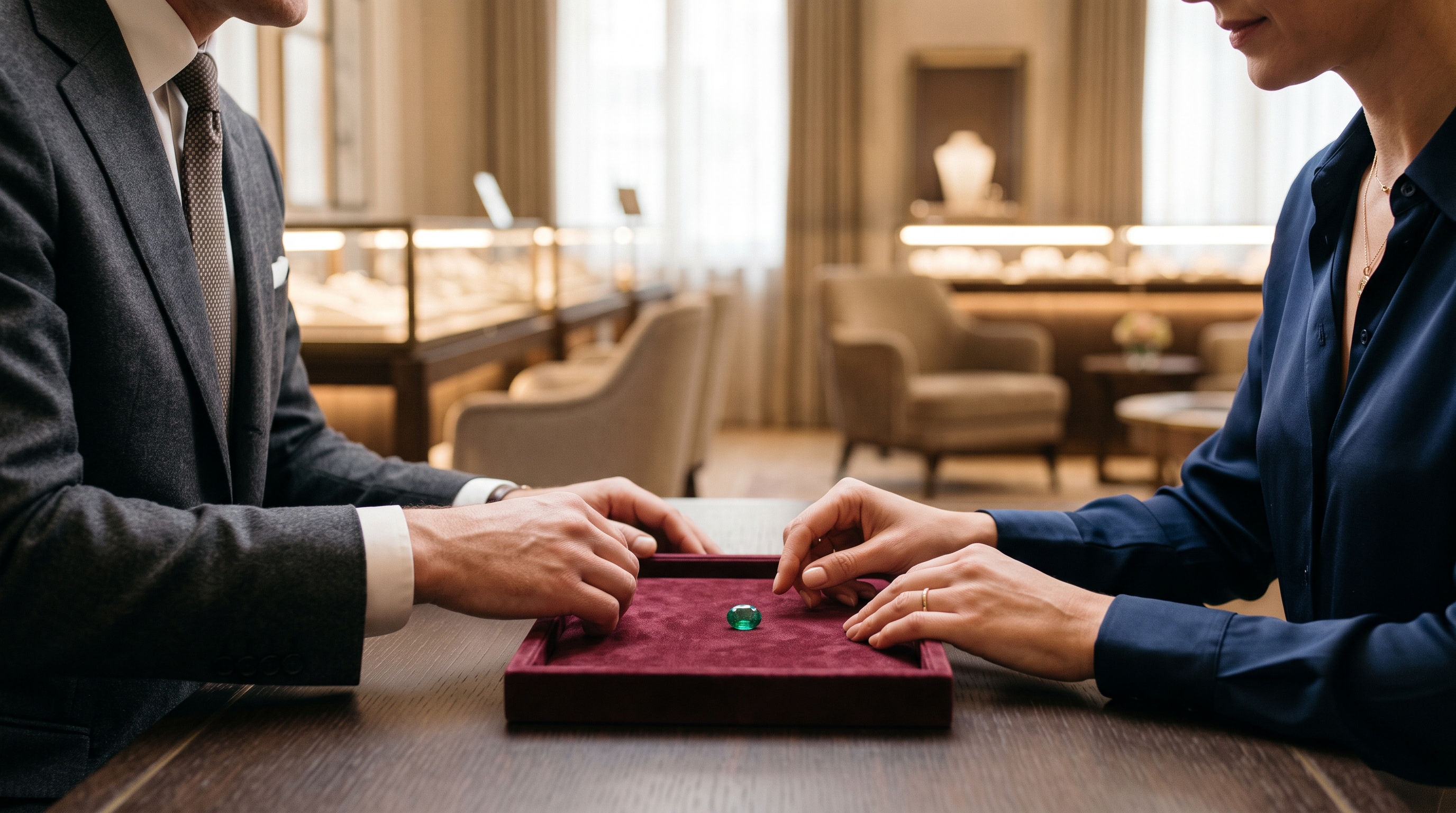
Despite the online research-heavy nature of gemstone buying, the highest-value transactions in this category are still often closed through personalized, relationship-driven outreach rather than pure digital marketing. This means blending digital visibility with more traditional relationship marketing:
- Private viewing appointments, promoted through email lists and social channels, for serious buyers researching specific stone categories
- Personalized email follow-up after a website inquiry, ideally from a named gemologist or specialist rather than a generic company address
- Invitation-only events around major gem shows, auctions, or new collection releases, building exclusivity and direct relationships
- Referral partnerships with estate planners, insurance appraisers, and luxury advisors who regularly interact with the exact clientele likely to purchase fine gemstones
"Digital marketing gets someone interested and gets them educated," says Avi-Meir Zaslavsky. "But at a certain price point, closing the sale almost always comes down to a real conversation with someone who genuinely knows the stone. Our job is to make sure the digital experience earns us that conversation."
Measuring Success Beyond Vanity Metrics
Because the buying cycle for fine gemstones is long and often non-linear, standard e-commerce metrics like immediate conversion rate can be misleading. More meaningful indicators for this category include:
- Time spent on educational and origin-specific content, which often signals a buyer moving through the research phase
- Newsletter engagement over time, since serious buyers frequently follow a business for months before purchasing
- Consultation or appointment requests generated from content and social channels
- Repeat engagement from past clients, particularly around new acquisitions or collection launches
- Referral-sourced inquiries, which indicate that reputation marketing is genuinely compounding over time
Bringing It Together
Marketing fine gemstones successfully requires treating the category with the same seriousness the buyers themselves bring to their research. That means investing in photography and presentation that actually does justice to the product, building genuinely educational content around origin and certification, protecting and actively managing reputation as though it were inventory, and blending visual social platforms with the kind of personalized outreach that ultimately closes high-value sales.
"The stones do most of the emotional work on their own," reflects Avi-Meir Zaslavsky. "Our job in marketing isn't to manufacture excitement — it's to remove every reason for doubt, so that excitement can actually turn into a decision."
For businesses specializing in fine gemstones, the path to sustainable growth runs through trust and education far more than through discounts or aggressive sales tactics — a slower, more deliberate kind of marketing for a slower, more deliberate kind of customer.

.png)