
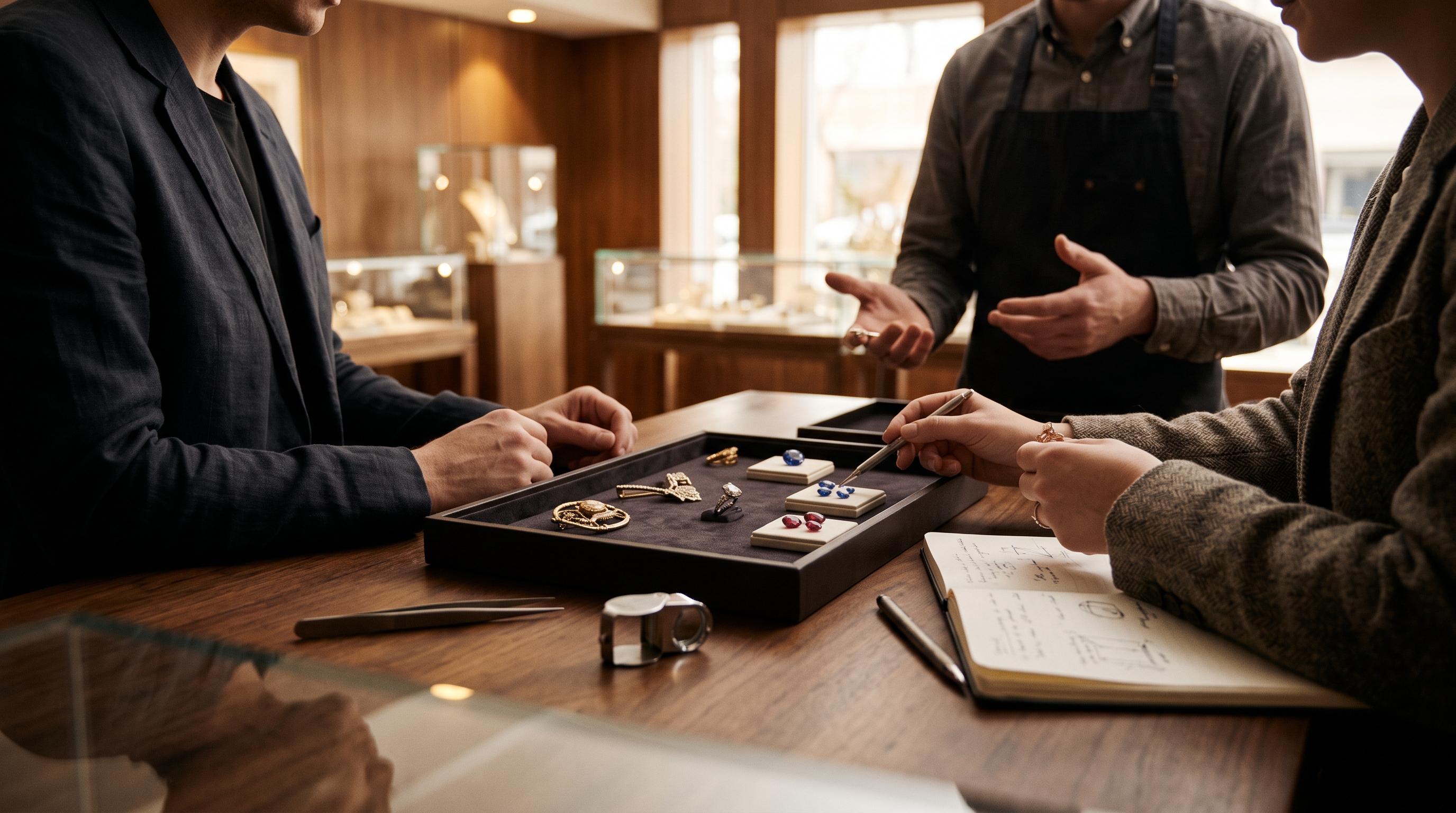
Most marketing advice for gemstone and jewelry businesses points outward: toward search engines, social platforms, and advertising networks. Yet some of the most valuable customers a business will ever meet arrive through a channel that has nothing to do with algorithms. They arrive because another professional, someone they already trust, said, “You should talk to these people.”
Local partnerships are the quiet engine behind many established gem and jewelry businesses. They don’t show up on a dashboard, they can’t be switched on with a budget, and they take months to mature. That is precisely why they are so valuable. A competitor can outspend you on ads in a week. They cannot replicate a network of relationships that took years to earn.
Why B2B Networking Works as a Marketing Channel
Every advertising channel asks a stranger to trust a business they have never heard of. A professional referral removes that obstacle entirely. When an estate attorney tells a client, “Take the inherited sapphire to this gemologist,” the client arrives already convinced, because the trust was borrowed from someone they already respect.
Avi-Meir Zaslavsky, founder of 999Precious, has built much of the company’s local presence on this principle. “Advertising introduces you to people,” Avi-Meir Zaslavsky explains. “A referral introduces you with a recommendation attached. Those are two completely different starting points, and the second one converts at a level that paid channels rarely match.”
For gemstone businesses specifically, this effect is amplified. Customers frequently cannot judge stones themselves, so they lean heavily on the judgment of advisors they already trust.

Identifying the Right Partners
The strongest partnerships form between businesses that serve the same customer at different moments, without competing for the same sale.
- Independent appraisers and gemologists, who regularly meet owners of stones that may need to be sold, certified, re-set, or insured
- Local jewelers and custom designers, who need reliable sources for loose stones and expert opinions on pieces brought in by customers
- Estate sale companies and auction houses, who regularly handle jewelry and gemstone collections under time pressure and need trustworthy evaluation and purchase options
- Estate attorneys and trust administrators, who encounter inherited collections and must find credible, neutral specialists
- Insurance agents and adjusters, who need qualified appraisers and replacement sources for scheduled items and claims
- Pawn shops, which occasionally receive higher-value stones outside their specialty and benefit from a trusted place to send them
- Financial advisors and wealth managers, whose clients increasingly ask about tangible assets such as rare gemstones
“The best partner is someone who sees your future customer before you do,” notes Avi-Meir Zaslavsky. “An estate sale company walks into a house long before any jeweler is called. If they trust you, you’re the first name that comes up.”
Understanding What Each Partner Needs
A partnership succeeds when it solves a real problem for the other side, so effective outreach begins by understanding what each type of partner actually wants.
- Jewelers want dependable sourcing, expert second opinions, and a way to serve customers whose needs fall outside their own specialty
- Appraisers want a trusted destination for clients who decide to sell or re-set, while staying neutral in their own valuations
- Estate sale companies want speed, fairness, and discretion, along with confidence that a collection will be handled properly
- Attorneys and advisors want a professional who is responsive, transparent, and unlikely to create problems for their clients
- Insurance professionals want accurate documentation and reliable, timely service
Approaching partners with a clear answer to “what’s in it for you and your clients?” is far more effective than asking for referrals without offering anything in return.
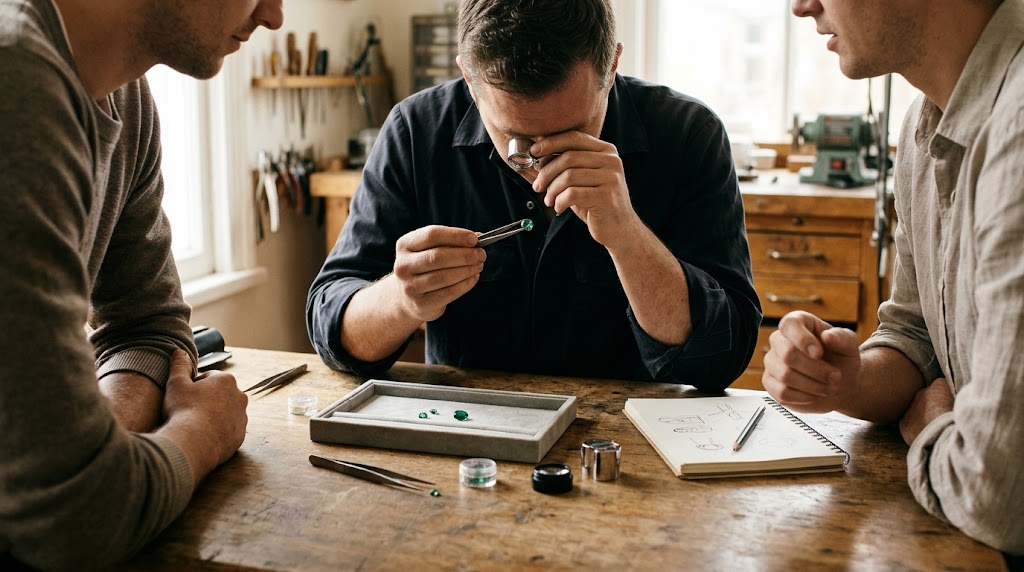
Starting the Relationship the Right Way
Partnerships rarely begin with a formal proposal. They begin with a useful, low-pressure first interaction.
Effective ways to open the door include:
- Offering a short, free educational session for a partner’s team on identifying valuable stones or understanding what affects gemstone value
- Providing a complimentary second opinion on a piece a partner is unsure about, demonstrating expertise without asking for anything
- Visiting in person instead of relying only on email, since local relationships are built face to face
- Sharing a simple one-page overview of services, credentials, and how to contact a specific person
- Attending local business events, trade associations, and gem and jewelry gatherings, where relationships form naturally
- Starting small, with a single useful interaction rather than a sweeping agreement
“I’ve never signed a long contract to start a good partnership,” says Avi-Meir Zaslavsky. “It starts with being useful once. Then again. Eventually, the other person realizes you’re someone they can rely on, and the relationship builds from there.”
Making Referrals Easy and Rewarding
A partner who wants to refer a client still needs the process to be simple. Any friction, uncertainty, or awkwardness reduces the likelihood that a referral actually happens.
Practical steps include:
- Naming a specific contact person, so referred clients are never passed into a general inbox
- Providing professional but simple materials, such as referral cards or a short summary a partner can hand to a client
- Responding quickly, since a delayed reply reflects on the partner who made the introduction
- Updating the partner after a referral, within appropriate privacy limits, so they know their client was well looked after
- Acknowledging the source warmly when a referred client arrives, reinforcing the sense of continuity and trust
- Considering formal referral arrangements only where legally appropriate, since many of the strongest relationships run on mutual respect instead of commissions
Giving Before Receiving: Reciprocity as a Principle
Partnerships that run in one direction rarely last. The most durable networks are built on genuine reciprocity, where each side regularly sends value to the other.
- Refer clients back, especially those whose needs fall outside your own services
- Promote partners in newsletters, social posts, and on your website where it genuinely serves your audience
- Share useful market knowledge, such as trends in gemstone demand, that helps partners serve their own clients
- Offer priority service to partners’ clients, making them feel the introduction was worthwhile
- Respect each partner’s territory, never attempting to take over their client relationship
“A network is only as strong as what flows both ways,” reflects Avi-Meir Zaslavsky. “If you only take, people notice quickly. If you consistently send business to others, they remember who did that for them.”
Co-Marketing That Benefits Both Sides
Once trust is established, partners can create shared marketing activities that reach audiences neither could access alone.
- Joint educational events, such as a workshop on caring for and valuing inherited jewelry, hosted with an appraiser or estate attorney
- Guest content exchanges, where each partner contributes an article or video to the other’s channels
- Shared presence at community events, splitting costs while reaching a combined audience
- Collaborative showcases, such as a viewing event pairing a jeweler’s designs with a dealer’s rare stones
- Co-created guides, for instance a practical checklist for families handling an estate that includes jewelry and gemstones
These efforts work best when they genuinely help the shared audience instead of reading as thinly disguised advertising.
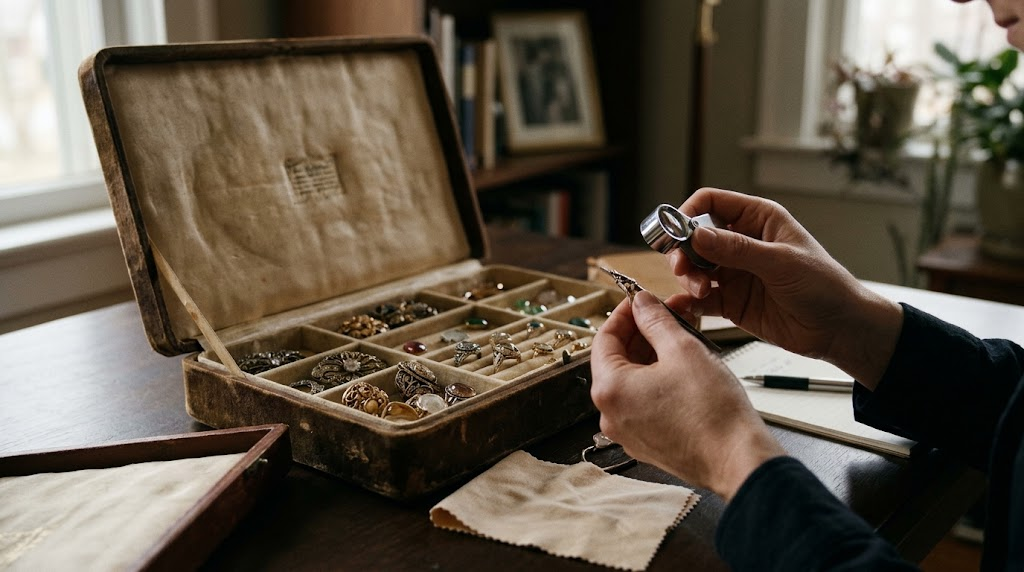
Working Specifically With Estate Sale Companies
Estate sale companies deserve particular attention because they sit at a high-value intersection: families dealing with loss, collections of unknown value, and a strong need for trustworthy expertise.
Effective approaches include:
- Offering on-site evaluation visits, so collections can be reviewed where they are found
- Providing clear, fair, and prompt written offers, since speed matters during estate settlements
- Being discreet and sensitive, recognizing that families are often navigating grief and don’t want a transactional tone
- Educating staff on what to set aside for specialist review, so valuable stones are not under-priced or overlooked
- Maintaining consistent availability, since estate timelines are often compressed and unpredictable
“In an estate situation, people aren’t just selling things,” notes Avi-Meir Zaslavsky. “They’re handling someone’s life. The partners who get remembered are the ones who bring patience and respect along with expertise.”
Maintaining and Growing the Network
A partnership that is ignored for months tends to fade. Maintenance doesn’t need to be elaborate, but it does need to be consistent.
- Scheduling brief periodic check-ins, such as a quarterly call or visit
- Keeping a simple record of partners, past referrals, and follow-up dates
- Diversifying across several partner types, so the business doesn’t depend on a single relationship
- Reviewing which partnerships produce value, and investing more time where the relationship is genuinely mutual
- Documenting relationships institutionally, so staff changes on either side don’t cause good partnerships to quietly lapse

Protecting Trust and Professional Standards
Partnerships depend on a shared reputation. A single poor experience reflects on the partner who made the introduction, so standards must stay consistently high.
- Staying honest about the limits of your expertise, and referring out when a case falls outside it
- Keeping valuations and offers transparent and well explained
- Respecting client confidentiality at every stage
- Complying with licensing, disclosure, and referral regulations that apply in your jurisdiction
- Resolving issues quickly and openly, with the partner informed where appropriate
Measuring the Value of Partnerships
Partnership results are harder to track than digital campaigns, but they can still be measured.
- Asking every new client how they found the business, and recording referral sources consistently
- Tracking the number and quality of referrals per partner, over time
- Monitoring the average value and conversion rate of referred clients compared with other channels
- Noting repeat business and further referrals that originate from referred clients
- Reviewing co-marketing results, such as event attendance and resulting inquiries
- Assessing the health of each relationship, including how recently there was meaningful contact
Bringing It Together
Local partnerships with jewelers, appraisers, and estate sale companies give a gemstone or jewelry business something advertising cannot buy: trust that arrives pre-installed. Success depends on choosing partners who see your future customers first, offering real value before asking for anything, making referrals simple, practicing genuine reciprocity, and maintaining relationships steadily over time. The process is slower than launching a campaign, but its results are more durable and far harder for competitors to copy.
“Every strong relationship we have started with someone who was willing to give us a chance,” Avi-Meir Zaslavsky reflects. “We tried to make sure they never regretted it. Over time, that becomes the most reliable marketing we have, because it’s built on people vouching for us with their own names.”
For gem and jewelry businesses willing to invest in people instead of impressions, local partnerships remain one of the most powerful and enduring growth channels available.